Podcast Hosting vs Distribution: The Invisible Infrastructure of Every Podcast
If you’ve ever published a podcast episode and expected it to be instantly everywhere—from Spotify to Apple Podcasts to half a dozen smaller apps—chances are you quickly ran into technical reality. For all the cultural glamor around podcasts, the mechanics of getting a show into listeners’ earbuds still baffle even savvy creators. How do you move from a finished audio file to actual subscribers across every major platform? This is where the distinctions between podcast hosting and distribution aren’t just technical: they shape your workflow, growth, measurement, and sometimes your legal ownership.
Separate Hosting From Listening Platforms
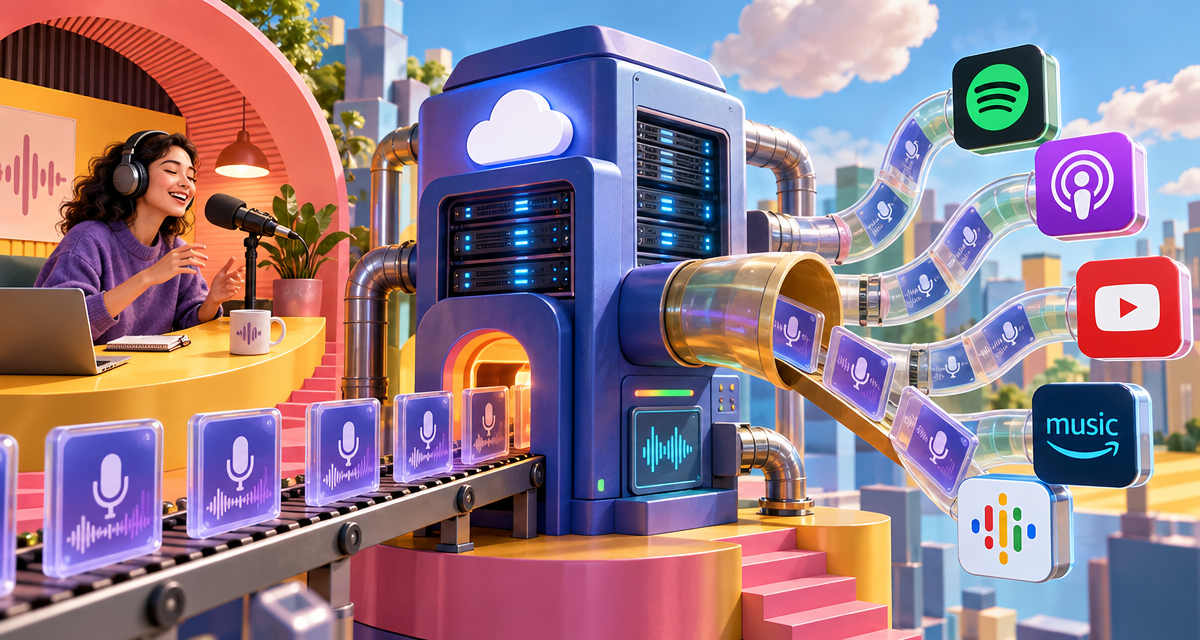
Think of hosting as your podcast’s “home base,” not unlike a digital studio that stores your master files and tells the world what exists in your library. Popular hosts—such as Libsyn, Buzzsprout, Megaphone, or Spotify for Podcasters—provide cloud storage for your audio, automatically generate your RSS feed (the magic URL that platforms use to track your show), and often bundle in analytics, monetization options, and embeddable players.
Distribution, though, is what gets your podcast to the actual listeners. Most people don’t type your host’s web address to listen—they use Apple Podcasts, Spotify, Amazon Music, or hundreds of other app directories. Distribution is about syndicating your feed to these platforms so your show is searchable, subscribable, and freshly updated wherever people listen.
- Hosting: Where your master files and metadata live. Controls access, stats, uploads, and settings.
- Listening Platform: Where listeners find and play your episodes (apple, Spotify, Overcast, etc.).
Blurring these lines leads to confusion: some “free” podcast services (especially those owned by a platform) limit where you can distribute, push advertising you don’t control, or lock your content away from other apps. Others are “bring-your-own-host” situations where Apple Podcasts or Spotify acts purely as a directory, not your publisher. If your goal is broad reach, control, and reliable growth metrics, choose your host independently and use it to orchestrate multi-platform distribution.
Understand the Role of Your RSS Feed
The unglamorous RSS feed—basically a structured XML file automatically generated by your host—remains the backbone of podcasting’s open ecosystem. Each time you publish an episode, your feed updates, and every connected listening platform pings that feed for new content. No RSS, no widespread distribution.
But there’s nuance here. Not all feeds are created equal, and mishandling your RSS feed can sabotage your show without you realizing it:
- Feed Ownership: The platform that controls your RSS feed holds immense power. It can add or strip metadata, inject ads, prevent you from leaving, or even deactivate your show if you break their rules.
- Distribution Rights: Some hosting providers assign you a subdomain (like
yourpodcast.host.com/feed), which can complicate migration if you ever switch hosts. Opting for a custom domain based RSS feed grants you lasting control of your show’s identity and discoverability. - Platform-Specific Features: Some podcast apps (especially Spotify) have begun supporting features beyond standard RSS: additional analytics, exclusive content, or episode video. In these cases, your feed might not deliver the full listener experience unless you engage directly with the platform’s tools.
Technical headaches aside, your RSS feed isn’t just a publishing format—it’s your show’s passport to distribution, discoverability, and even revenue generation (since advertisers and sponsors increasingly verify listener numbers across multiple platforms).
Decide Whether You Need Video Distribution
Podcasting was born as an audio-first medium, but the recent wave of “video podcasts”—spurred by influencers, YouTubers, and TikTok shorts—introduces new variables into the hosting vs. distribution equation:
- Traditional Audio Podcast: Your RSS feed distributes audio files and show notes only. Platforms like Apple Podcasts and most podcast apps never display video.
- Video Podcast: If you want your episodes on YouTube, Spotify’s video podcasts, or even TikTok clips, you’re simultaneously running an audio podcast and a video content channel. Some hosts now support both, but many creators upload manually to YouTube for control and algorithm advantages.
This split has trade-offs:
| Distribution Channel | Supported Formats | Typical Monetization | Measurement Quality | User Discovery Potential |
|---|---|---|---|---|
| RSS-Based Podcast Apps | Audio (+some text/meta) | Sponsorship, Dynamic Ads | Download/Listener Metrics | Good (app directories, search) |
| YouTube | Video (+Audio) | Pre-Roll/AdSense, Sponsorship | Detailed Watch Time, Engagement | Excellent (YouTube Search/Discovery) |
| Spotify Video Podcasts | Audio or Video | Spotify Monetization, Dynamic Ads | Platform Analytics | High (Spotify Userbase) |
If your content is better experienced on video—visual interviews, behind-the-scenes, tutorials—building an integrated strategy across platforms makes sense. But beware: uploading to YouTube or Spotify video may mean producing separate assets, managing split audiences, and monitoring analytics in two (or more) dashboards. For many independent creators, audio-only remains the pragmatic default, with select video “trailers” or snippets seeded on social platforms for growth.
Plan Publishing Access and Ownership
Ownership and access don’t just matter for legal reasons; they’re critical for workflow, collaboration, and futureproofing. Podcast creators, especially those running branded content, growing production teams, or collaborating with sponsors, need to scrutinize:
- Account Access: Can you assign roles—editor, producer, analytics-only, guest uploader—within your host’s dashboard?
- Feed and Content Ownership: Read the fine print. Is your host entitled to insert ads, assert copyright, or otherwise limit how you use or migrate your show?
- Brand and Intellectual Property: If your show grows (or if the brand running it gets acquired), who owns the listener data, published content, and audience relationships? Many creators only realize too late that they signed away their most valuable digital asset—their RSS feed—to a free host.
- Platform-Specific Risks: Hosting with a “platform-first” host like Spotify for Podcasters or Anchor can speed your show’s publication but limit flexibility if you later want to prioritize platforms not directly partnered with your initial provider.
Smart podcasters work backward from their long-term business/creative goals. If you’re building a show for a client, client-side ownership of the RSS feed and hosting account should be non-negotiable. If you’re an indie creator, favor hosts that bake in easy export/migration, granular team permissions, and clear separation between media hosting and distribution agreements.
Build an Episode Release Checklist
High-performing podcast teams thrive on repeatable routines—a system that blends creativity with operational discipline. An effective episode release checklist addresses both the technical and creative sides of the workflow, bridging the gap between the “podcast hosting vs distribution” logistics and the listener’s experience.
- Finalize episode audio/video: Master file exported in correct format, properly named, and securely stored.
- Craft compelling episode titles and show notes: Use clear, consistent structure to optimize for search and in-app discovery.
- Upload to host: Attach metadata, set release date/time (consider time zones and staggered or “instant” drops).
- Check episode artwork: Follow platform-specific sizing and quality guidelines.
- Distribute RSS feed: Confirm immediate pull by all connected platforms (sometimes publishing delays occur, especially across global platforms like Apple or Amazon Music—plan accordingly).
- Social teaser assets: Schedule clips and quote cards for TikTok, Instagram, Twitter, LinkedIn, or email newsletters.
- Pre-publish private link: Share advance copies with guests, sponsors, or press for approval/feedback (ideally before a hard public drop).
- Quality assurance: Listen to the final published episode on several platforms to confirm playback quality, metadata accuracy, and artwork rendering.
All of this reflects professional podcast publishing, not just “upload and hope for the best.” When distribution breaks (episodes not appearing, metadata errors, incorrect links), it’s usually traceable to missing checklist steps or insufficient host-to-platform coordination.
Measure Listening Across Platforms
One of the ironies of podcasting: even as it’s become mainstream, analytics lag behind video and web. Unlike YouTube or TikTok, podcast listening is mostly decentralized—platforms rely on your host’s RSS data, but direct-play metrics remain fragmented. This matters for strategy, sponsorship rates, and content choices:
- Hosting Analytics: Most hosts offer basic stats (downloads, unique listeners, episode drop-off). Some integrate with industry standards like the IAB Podcast Measurement Guidelines for more credible numbers.
- Platform Analytics: Major platforms (especially Spotify and Apple Podcasts) now provide creator dashboards with more granular data, but you may need to manually claim your show/account to access these insights.
- Download vs Listen: Downloads count file requests—not always actual listens. Streaming platforms may undercount “offline” listens, or not report starts/completions accurately.
For marketers, agencies, and independent podcasters alike, triangulating performance means checking both your host’s analytics and claiming your show within each major listening app that offers stats. Bright spots are emerging: Spotify’s analytics panel offers demographic, device, and engagement data rivaling those of social video, while Apple has improved retention stats. Still, plan for gaps: some platforms share little tracking info, making cross-platform measurement a blend of art and science.
Podcast Hosting vs Distribution: Takeaways for Actual Creators
Publishing a podcast isn’t just about uploading your audio and waiting for the world to listen. The split between hosting and distribution touches ownership, flexibility, measurement accuracy, and even your legal rights. The best creators and brands treat their host like mission control: organizing assets, managing feeds, and controlling distribution to every desired platform. Distribution, meanwhile, is the art (and sometimes headache) of maximizing reach, managing multiple dashboards, and building an audience wherever listeners already hang out.
Whether you’re launching a one-person show or scaling a branded content division, strategic choices about hosting, feed ownership, video workflows, access, and analytics will shape your show’s growth, monetization, and future agility. Don’t let the infrastructure trip you up—treat it as a powerful lever to maximize your creative and business outcomes.