AI Brainrot Marketing: When Nonsense Helps Your Brand—and When It Gets in the Way
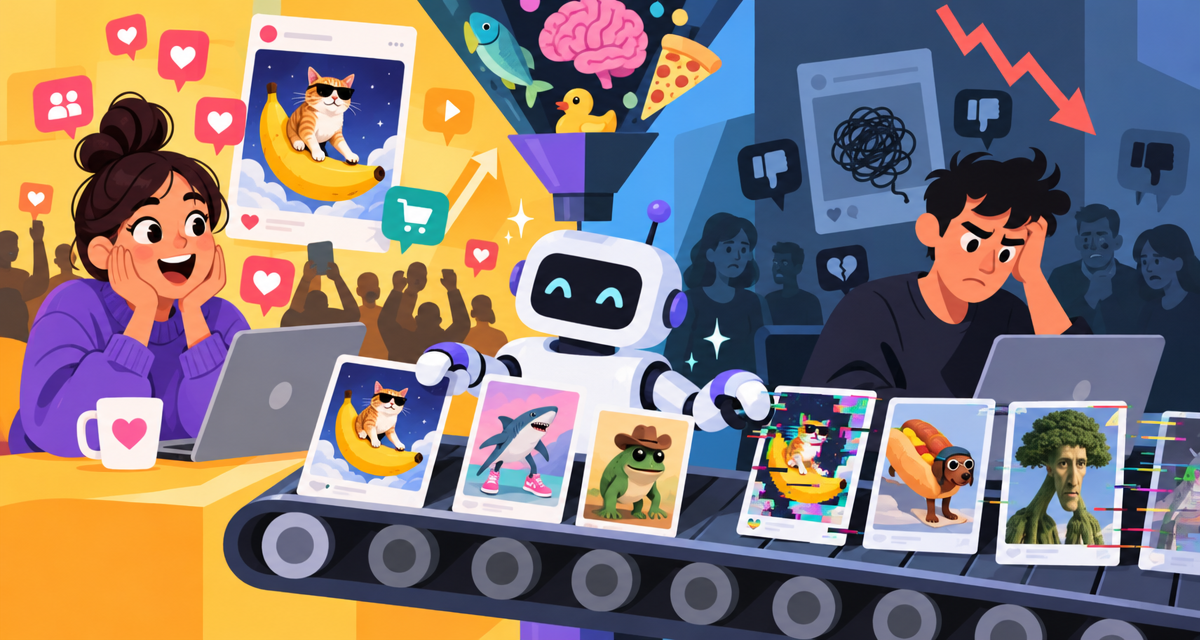
Ads that don’t make sense used to get rejected in brainstorms, not ushered in with open arms. But as businesses now flood social feeds with bizarre, tongue-in-cheek memes and offbeat videos, “ai brainrot marketing”—the kind where chaos and confusion are the point—has shifted from a fringe tactic to a central strategy for some brands. Why are brands leaning into the absurd? And, more critically, when does nonsense pay off, and when does it just make a mess of your message?
Identify What Makes the Joke Work
Anyone can be weird on the internet. But not every off-the-wall campaign becomes a meme—or drives real outcomes for a brand. The effectiveness of absurdist campaign strategy doesn’t come from randomness alone, but from a precise understanding of cultural signals, timing and delivery.
Take Duolingo’s TikTok strategy: the intimidating green owl isn’t just acting out wacky skits because it’s funny (though it often is), but because it both lampoons and taps into the chaos of social media culture. For followers, the absurdity feels in on the joke, not just trying to get in with the kids. Wendy’s Twitter persona took a similar approach—well before AI choreographed their banter—hosting “roast days” that won audience love and headlines. Both brands joke about themselves as much as they do about their industries, making the absurdity familiar, not tone deaf.
- Precision, not randomness: Absurdity that lands is usually highly tuned—not every meme or meta-reference is equally relatable.
- Shared references: If your target audience doesn’t understand the joke, the campaign fizzles into confusion. Meme-savvy segments are a different audience than shoppers looking up refrigerator specs.
- Timing and context: What’s funny on TikTok at 11 p.m. may land flat at 9 a.m. in a professional newsletter.
The truth? The best “ai brainrot marketing” isn’t just random—it’s calculated chaos. Campaigns succeed not by surrendering to nonsense, but by understanding exactly what sort of nonsense makes your brand moment meaningful for your audience.
Connect the Absurdity to Your Product
It’s easy to create content that’s “so bad it’s good”—but surprisingly hard to do so while still linking back to what you actually offer. The wildest stunts and most viral moments quickly turn into marketing cautionary tales if nobody remembers what was being sold (remember the infamous Pepsi protest ad?).
Done right, off-the-wall creativity can highlight real product attributes, use-cases or values, just in a way that’s unexpected. Take Old Spice’s surreal “The Man Your Man Could Smell Like” campaign. The rapid-fire dreams-logic script and impossible visual gags were absurd, but every punchline circled back to the brand’s promise: this body wash is confident, bold, attention-grabbing—and so are you, if you use it. Even the current wave of AI-generated nonsense (“an otter holding a spatula announcing your flash sale”) can encode brand values, so long as there’s connective tissue between the chaos and something people genuinely want or need.
Strategies to link the silly back to your brand:
- Product placement without apology: Make sure your logo, deal or call-to-action isn’t just an afterthought in the chaos.
- Parody your category: Use the joke to highlight—and mock—the tired tropes of your industry, then pivot to show what you offer instead.
- Create recurring characters: Absurd mascots, running jokes or familiar AI-generated personas can give randomness a relatable form people associate with your brand.
- Connect to real product benefits: Let the joke exaggerate a real pain point or desire—then deliver your actual solution in the punchline.
Without this connective tissue, absurdism just becomes distraction. The key is not simply being weird, but being weird for a reason, and always steering that energy back toward what the brand makes possible in real life.
Decide Which Audiences and Channels Fit
Not every audience is in on the joke, and not every channel is a blank creative canvas. The difference between a viral hit and brand backlash often comes down to whether your chosen nonsense matches your audience’s digital literacy, sense of humor and expectations for the platform.
Gen Z, for instance, grew up amidst “deep fried” memes, anti-ads and layers of irony. For them, brand absurdity can signal authenticity and alignment with online culture—especially on TikTok, Instagram Reels or Discord channels about niche interests. On the other hand, try this same approach on LinkedIn or in a B2B SaaS campaign targeting decision-makers, and you’ll likely get confusion or accusations of unprofessionalism (the “brainrot” in question may be yours, not theirs).
Choosing the right audience-platform blend is as crucial as the message:
- Audience: Are your users digital natives or expecting clear, direct communication?
- Platform: Does the channel reward absurd humor (e.g., TikTok, Twitter/X, YouTube Shorts), or does it prioritize clear utility (e.g., search ads, professional newsletters)?
- Stage of customer journey: Discovery-stage prospects may respond to nonsense; closing-stage customers need substance.
This is a balancing act. Some brands—like Duolingo, Old Spice, and fast fashion retailers using AI meme generators—thrive on pushing boundaries where their customers gather for fun. Others risk muddying their message, alienating core customers or making the business look unserious if they deploy ai brainrot marketing where clarity and trust are more valuable than hot takes.
Recognise When the Brand Gets Lost
There’s a fine line between memorable absurdity and marketing that simply disappears into the churn. If your campaign is all spectacle and no substance, the fallout can range from confused prospects to outright ridicule—or, perhaps worse, wasted spend with no results.
Classic pitfalls that signal nonsense has swallowed the brand:
- No clear call-to-action: If viewers laugh but don’t remember what the ad was for, the campaign has failed.
- Misaligned tone: Brands associated with legacy confidence or luxury may cause brand dilution—or even reputational harm—by piggybacking poorly on Gen Z meme culture.
- The meme overshadows the message: If the only thing that goes viral is the weirdness, you’ve become the next cautionary meme, not the product people talk about.
- Internal fatigue: Even creative teams can burn out or lose strategic direction if “be weird” becomes the only north star for campaigns and briefs.
One recent example: multiple fast-food chains tried to copy Wendy’s Twitter persona but without the wit, self-awareness or timing. Result? An uncanny valley of forced, cringeworthy posts that neither connected with young audiences nor pleased longtime fans. Similarly, brands jumping into AI-generated meme chaos often produce images or slogans that are incomprehensible, instantly forgettable, or—if they misjudge the mood—even offensive.
Effective use of absurdist campaign strategy, especially when powered by AI, demands ongoing gut checks and brand clarity. If you can’t answer, in simple terms, why a specific campaign aligns with your promise and goals, it’s time to step back from the randomizer and return to basics.
Measure More Than Reactions
The “likes” and uproar of a viral brainrot moment can be thrilling—but fleeting engagement is only one yardstick. The real measure isn’t just “was it funny?” but “did it drive actual results and reinforce what the brand stands for?”
Too many brands get seduced by the dopamine hit of engagement metrics while missing the bigger picture. To truly evaluate whether an absurdist campaign paid off:
- Track attribution: Can you connect the spike in web traffic, app downloads or sales to the campaign, or did it simply amuse anonymous browsers?
- Brand lift studies: Did associative qualities (funny, clever, relatable) genuinely improve consideration or intent among your priority segments?
- Retention not just reach: Are you building a community of return fans, or was this a one-off viral blip?
- Negative impact: Did you lose followers, receive complaints or get unfavourable press mentions from missed attempts at humor?
The best brands deploying ai brainrot marketing build feedback loops that go beyond meme metrics to long-term business outcomes. They’re candid about what works, revisit their playbook, and stay wary of the temptation to do nonsense for its own sake rather than as a lever for deeper audience connection.
Absurdity in Marketing: Strategic Use vs. Self-Destructive Chaos
| Campaign Element | When Absurdity Works | When It Undermines the Brand |
|---|---|---|
| Connection to Product | Highlights core value via running jokes or parodied ads | Leaves viewers confused about what’s being sold |
| Audience Fit | Channels and humor align with digital native users | Fails with mismatched segments seeking trust or expertise |
| Measurable Outcome | Leads to sales, downloads, or positive sentiment lift | Generates engagement but no business impact |
| Brand Equity | Positions brand as culturally savvy and playful | Risks appearing desperate, unserious or “try-hard” |
The Bottom Line
Absurdist campaigns are no longer a creative outlier—they’re part of a playbook that major brands and solo creators alike are exploring, thanks to meme culture and AI-powered content tools. The upside is high: brands can break through apathy, build rapid affinity, and co-create with their audiences in ways that traditional tactics rarely enable.
Yet the margin for error is slim. Offhand weirdness isn’t a substitute for relevance or strategic clarity. The next viral hit could just as easily become your brand’s PR headache or the butt of the week’s in-jokes.
The best results come to brands that treat “ai brainrot marketing” not as an excuse to abandon strategy, but as an invitation to rethink how meaning, connection and context work in a strange new digital culture. Be absurd, but be absurd with intent.