
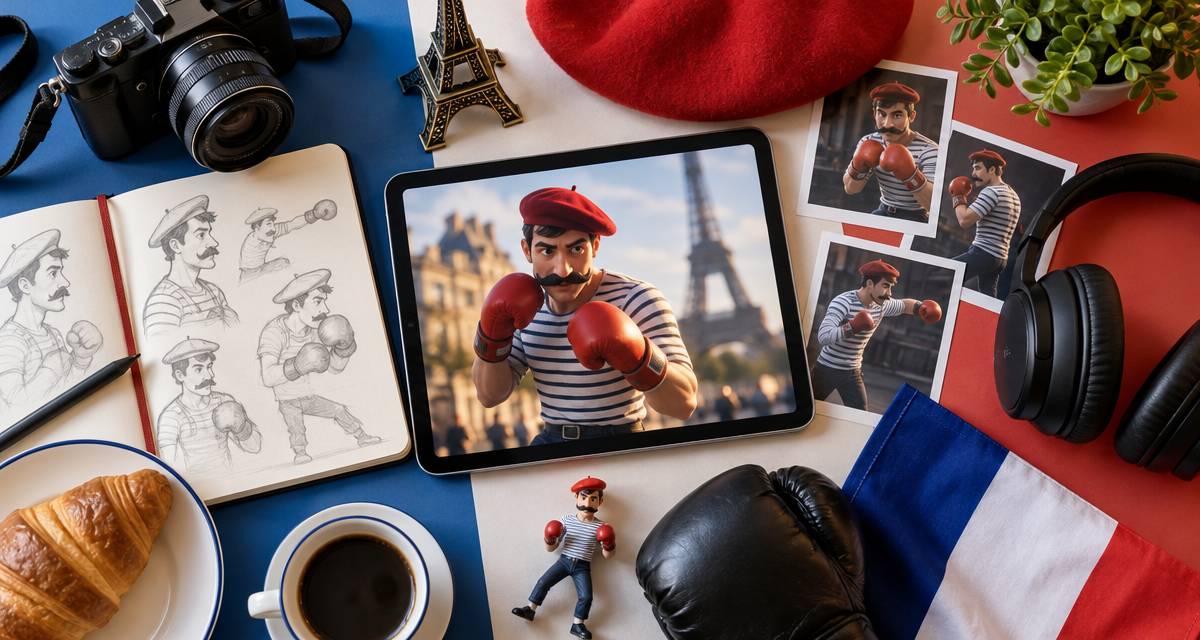
Meet the Frenchman Fighting Absolutely Nobody
It begins, as so many internet oddities do, with a video. A slender, middle-aged man in a telltale red tracksuit steps onto an empty Parisian street. He pumps his arms, shuffles on his feet, and begins a complex routine—dodging, ducking, feinting and throwing punches at invisible opponents. No crowd, no rivals, no actual fight. Yet millions have watched these clips, shared them on TikTok, laughed at reaction edits, and—perhaps most unexpectedly—created a small cult around him. His name? Jean Philanthrope, often abbreviated by fans and platforms alike to “Jean Phil.” But unlike viral pranksters or TikTok comedians, Jean Phil isn’t riding a single meme or gimmick. He’s become instantly recognisable, not for who he faces but for what—and how—he performs. That’s a quality every brand, creator and would-be internet celebrity wants to understand.
What elevates “jean phil ai” from social media oddity to a case study in recognisable character design is his total commitment to a routine. There’s an evident pattern—same outfit, same gestures, minor variations in location. Jean Phil shadowboxes alone and in public, rarely breaking character, never acknowledging the audience. He is absurd, but also consistent, which feels intentional rather than random. And that, as both AI-generated personas and human creators have discovered, is digital gold: recognisability that cuts through platform noise.
How Jean Phil Became a Recognisable Character
With no catchphrases, no dramatic story arcs and absolutely no competition in his discipline (shadowboxing on street corners), Jean Phil’s rise isn’t immediately obvious. To understand it, compare him to the endless landscape of internet personalities scrambling for attention: meme-chasing, reinventing their brand weekly, copying trending formats. Jean Phil takes the opposite approach—he repeats.
What makes him recognisable isn’t narrative complexity or celebrity borrowing; it’s repetition. His routine operates almost like a logo: instantly identifiable, endlessly remixable, impossible to mistake for someone else. Consider how the purple tracksuit, the off-kilter rhythm of his moves, and the irrepressible earnestness set him apart in a feed full of marketers, fitness influencers and self-conscious parody acts.
His character design also mirrors a truth that marketers and brand strategists have known for decades: consistency is more memorable than novelty. In the world of AI-generated personalities, like those built by Replika or the avatars structuring branding for virtual influencers, the lesson remains the same. No matter how elaborate the technology, what sticks is the reliable, surface-level cues that let us instantly say “oh, that’s Jean Phil.”
Why One Outfit and One Routine Can Be Enough
The logic here runs counter to the “innovate or die” mantra drilled into digital culture. Yet if you look at the mechanics of memory, psychology—and the realities of social platforms—repetition wins. Jean Phil wears the same outfit because it is a beacon; his singular shadowboxing routine is his signature. This is character branding at its most distilled.
- Pattern recognition: Audiences scan, not study. Simple, bold visual signals allow for rapid recall even as content scrolls past at speed.
- Low cognitive load: The more variables you introduce (outfits, props, routines), the harder it is for viewers to form strong memories. Consistency helps content “stick.”
- Remix culture: Fans, AI models, and meme editors can riff endlessly on a fixed archetype. One routine, recontextualised, generates infinite varieties.
In an era where AI character tools such as Character.AI let anyone spawn a new persona, the lesson from Jean Phil’s approach is clear: recognisability doesn’t demand narrative depth or theatrical skill. It demands clarity, durability, and an unmistakable visual idea.
Separate Character Recognition From Audience Loyalty
This is where the Jean Phil phenomenon becomes especially revealing for anyone building—or programming—an online persona. Recognisability and loyalty are not the same. Jean Phil is instantly identifiable, yes, but that does not guarantee an audience that will follow him anywhere, engage deeply, or become paying fans. This pattern holds on platforms built around recurring characters, whether AI-driven avatars or social-first creators: people enjoy the symbol, but true loyalty is rare and fragile.
For example:
- Top-of-mind, not top-of-wallet: Jean Phil’s visibility in meme cycles may bring millions of views but doesn’t automatically translate into Patreon subscribers, merch buyers, or a sustainable brand.
- Familiarity breeds play, not necessarily engagement: His routine is perfect meme fodder and ripe for edits or parodies, but the engagement remains shallow. Audiences may love the reference, but don’t “care” about the creator in a traditional sense.
- AI avatars face the same wall: Do you recall the name of that virtual influencer you saw last— or did she just fade into background noise after her tenth dance clip? Being “known” is not the same as being “loved.”
This distinction matters for digital businesses and marketers. Recognition delivers reach, awareness and entry into platform culture. Loyalty, however, requires something more: a sense of personal investment, ongoing novelty, or a community that decides the character is “theirs.” Relying on routine alone is a shortcut to surface fame, not sustainable fandom.
Build a Repeatable Character Without Copying the Gimmick
So what can creators, brands and AI developers actually learn from the “jean phil ai” model without simply cloning a shadowboxing Frenchman? The answer lies in understanding the mechanics behind the phenomenon—not just chasing the meme.
Here’s how to apply these lessons ethically and effectively:
- Develop clear visual language: Whether you’re building a mascot, a virtual spokesperson, or an AI avatar, settle on strong, repeatable visual elements. Hats, gestures, recurring settings—simple, memorable, and designed for rapid scanning.
- Maintain a signature routine—but allow small, fresh variations: Just as sitcoms run the same “beats” with subtle changes, keep your core pattern while adapting context. Jean Phil’s act shifts locations but not tempo; your character can explore new themes without losing their core identity.
- Let remix culture do the work: Embrace—not suppress—fan reinterpretations. The meme cycle amplifies repeatable symbols; fighting it often kills momentum.
- Don’t mistake repetition for personality: Personality builds loyalty. Seek ways to humanise the character, share behind-the-scenes moments, or even comment on the routine itself. This is as true for AI-generated personas as for human creators.
For digital businesses leveraging AI avatars, recurring characters, or creators hoping for viral recognisability, the Jean Phil case study is a reminder: success is about reliably occupying a space in the audience’s mind. The shadowboxing Frenchman didn’t need a new routine for every video. He needed to be unmistakably, laughably himself—and that consistency is the real secret sauce, AI-driven or not.