The AI Rumpelstiltskin Meme: How a Dancing Goblin Became Better Content Than Your Brand Campaign
It isn’t every day that a nonsensical AI-generated video outshines corporate content campaigns by a country mile. Yet the “AI Rumpelstiltskin” meme—a jittery, leering goblin mid-routine on a medieval dancefloor—has done exactly that, saturating social feeds with something so shareable that even brands can only look on in faint envy. For anyone confused about why TikTok, Instagram, and Twitter (sorry, X) seem obsessed with a dancing creature in low-res CG, what’s at play here isn’t just randomness. The meme is a revealing test case for how digital participation, nostalgia, and remix culture can take an obscure image and transform it into something far more powerful than any planned campaign. Let’s pick apart how this happened—and what it means for anyone striving to make content that actually sticks.
Where the Dancing Rumpelstiltskin Came From
Like so many viral moments in contemporary meme culture, the origin story of the AI Rumpelstiltskin meme is as muddled as the video’s uncanny pixels. The clip first emerged online in early 2024, posted without credits by a handful of smaller accounts on social platforms. Within days, it became clear the video was AI-generated, likely using tools for 3D animation and rapid content generation—never officially tied to a feature film, cartoon series, or gaming asset repository.
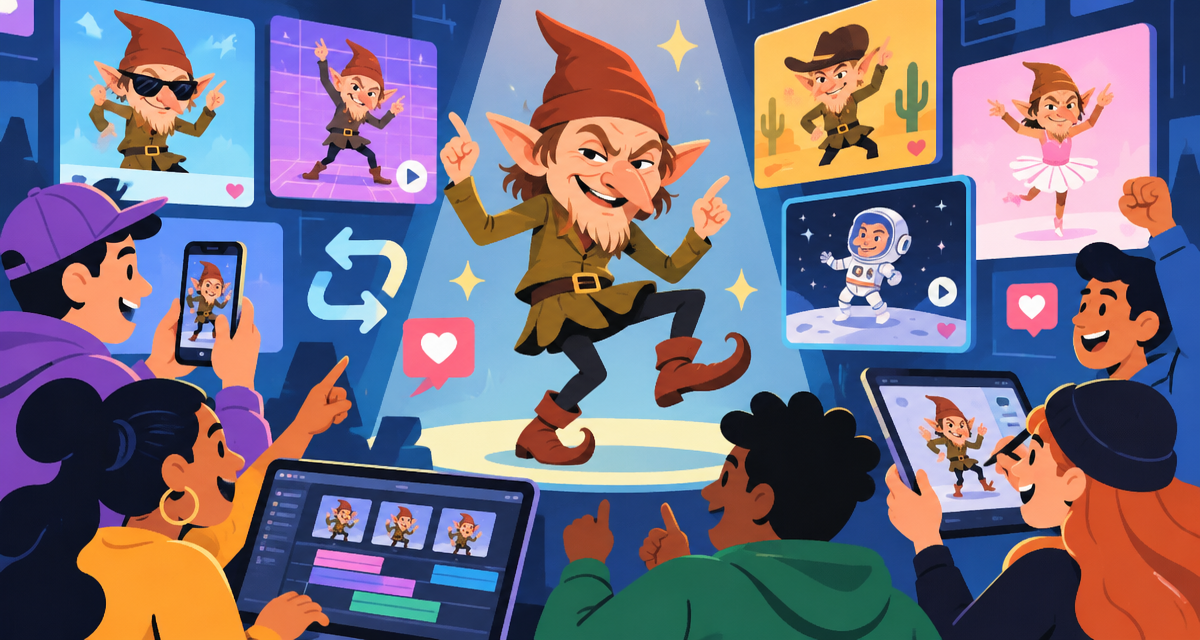
What actually happens in the video? Rumpelstiltskin—rendered as a slightly grotesque, goblin-like figure—performs a frenetic, almost gleeful dance in a sepia-lit medieval tavern. There’s a rough-around-the-edges charm to the animation: the lighting is off, the physics feel barely simulated, and Rumpelstiltskin’s weirdly expressive face lands somewhere between fairy tale and nightmare. It all feels deliriously deliberate—except it isn’t.
This is important. Unlike classic memes “leaked” from real movies or game assets, the AI Rumpelstiltskin video is a product of synthetic media stitched together with no context. There’s no backstory, no canon, not even the consistency of a franchise mascot—only suggestion, ambiguity, and a sense of open-ended play. This “openness” would soon turn out to be the fuel that sends it rocketing through meme culture.
Why People Thought It Was an Old Movie
Something magical happens when viewers can’t immediately place the source of a meme. With the AI Rumpelstiltskin meme, the janky look and dreamlike visuals triggered a collective false memory. On TikTok and Reddit, thousands swore they recognized the scene from an old VHS or a half-remembered children’s fantasy film. The comments filled with “Didn’t this used to play on late-night TV?” and “I thought this was from Faerie Tale Theatre.”
This fake nostalgia is the backbone of the meme. Contemporary internet culture is obsessed with recycling imagery from childhood: 1980s puppet shows, direct-to-video fantasy movies, questionable PS1-era cutscenes. Brands from Netflix (with “Stranger Things”) to Nintendo (with every retro remake) have capitalized on this trend, but the Rumpelstiltskin meme does it in a more powerful way. It’s a fragment that feels “almost” real—a lost cultural object you can almost, but never quite, identify.
Here’s the business insight: Authentic nostalgia is hard for brands to manufacture because audiences instantly sense when a commercial campaign tries to weaponize their past. But AI-generated weirdness, infused with artifacts of historical media, sidesteps that skepticism and actually invites people to fill in the gaps. The meme’s “maybe this was real, maybe not” is more compelling for digital natives than any perfectly polished reboot.
How the Song Turned a Scene Into a Meme
If visuals set the hook, the music set off the feeding frenzy. One of the earliest (and now most recognizable) remixes paired the dancing Rumpelstiltskin with a high-gloss, Eurodance track—something bombastic and dramatically mismatched with the medieval setting. The combination of jittery goblin strut and hyper-modern beats turned the clip from a passing oddity into a meme factory.
Part of the appeal is the artificial, surreal juxtaposition between image and sound. Where millions of marketing dollars are spent in the name of “brand fit,” meme culture finds magic in chaos. A folk tale villain dancing to an amped-up club banger creates a scene too absurd to ignore, inviting audiences to get involved: Will someone swap out the song again? What would it look like with a sea shanty? Or an unhinged TikTok mashup?
It’s a reminder that sonic branding—the auditory cues that define so many successful ad campaigns—can just as easily emerge through remix chaos as from strict guidelines. In the Rumpelstiltskin meme, the wrong song is always the right song. Attempts to explain, regulate, or pin down what “works” are irrelevant; what matters is the wild energy of participation. Brand campaigns that obsess over “alignment” often miss this, smothering opportunities for organic creativity.
Why Audiences Keep Remixing the Same Clip
The churn of remixed Rumpelstiltskin clips isn’t a coincidence—it’s digital folk art in action. Once the AI-generated source video and its first musical pairing hit critical mass, creators across the web started:
- Re-cutting the dance to different genres—K-pop, heavy metal, children’s TV.
- Editing new backgrounds, making Rumpelstiltskin dance in everything from retail parking lots to the Oval Office.
- Layering on cutaway gags, “reaction” edits, and even absurdist voiceovers.
- Building “deep lore,” with fake explainers and fan-made histories purporting to solve the meme’s mysteries.
Remix culture here functions as collective improvisation—not just making fun of the original, but building community through shared reference points and creativity. This is a natural outgrowth of how contemporary online culture operates: The best content isn’t a finished product, but a “template” audiences are invited to transform.
This ecosystem of participation is something brands rarely achieve (though they try desperately, incentivizing “user-generated” ads or inviting co-creation initiatives). The catch? When companies start by protecting intellectual property and defining the “right” message, the ecosystem collapses. The AI Rumpelstiltskin meme thrives precisely because there are no gatekeepers, approvals, or final authority to please.
The Remix Lifecycle Table
| Remix Stage | What It Looks Like | Who Participates | Business Applicability |
|---|---|---|---|
| Initial Generation | AI clip emerges, possibly with crude audio | Original creator, early discoverers | Low—most brand assets too controlled to allow |
| Viral Boost | Clip paired with surprising/funny audio, gains traction | Meme-savvy creators, TikTok editors | Medium—brands with broad “open” licenses see some success |
| Open Remix | Template reused, new genres/backgrounds inserted | Wide audience, remixers, parodists | High potential—but only if brands allow free, unsupervised use |
| Meta-Evolution | Fake deep-lore, in-jokes, escalating challenge videos | Online subcultures, longtime fans | Rarely achievable by most brands; needs true hands-off approach |
What Brands Can Learn About Leaving Room for Participation
If there’s a takeaway for marketers and brand managers watching this spectacle unspool, it’s not that you should “try to make viral goblins.” (Good luck submitting that in an executive meeting.) The real lesson is about leaving intentional gaps: Audiences will not only fill them, but often make content more valuable than anything “approved.”
- Less polish, more play: Round-the-clock focus on quality control kills the “breakthrough moment” that comes from AI errors, accidental weirdness, or unplanned combinations. Give up perfection; create templates rather than tight stories.
- Co-creation, not just permission: Remixes can’t just be “allowed”—they have to be invited. This means releasing assets, audios, or templates with meaningful usage rights and without the expectation of always controlling the result.
- Value ambiguity: When an audience can’t quite place a cultural reference, they’re more likely to make it their own. AI-generated content often stirs this effect by being nearly—but not exactly—like real media. Brands chasing nostalgia can learn from the “close but off” nature of the meme.
- Accept losing control: Most crucially, the best memes evolve precisely because they escape their creators. Attempts to reign them back in (whether through copyright takedowns, strict contest rules, or forced “brand voice”) are almost always the kiss of death.
In the arms race for attention, the AI Rumpelstiltskin meme exposes a simple, counterintuitive truth: The best content is often the stuff nobody “wants” to own—open-source weirdness, cultural detritus, and community-driven in-jokes. Brand marketers can spend millions seeking that magic, but right now, a dancing goblin holds the dancefloor.